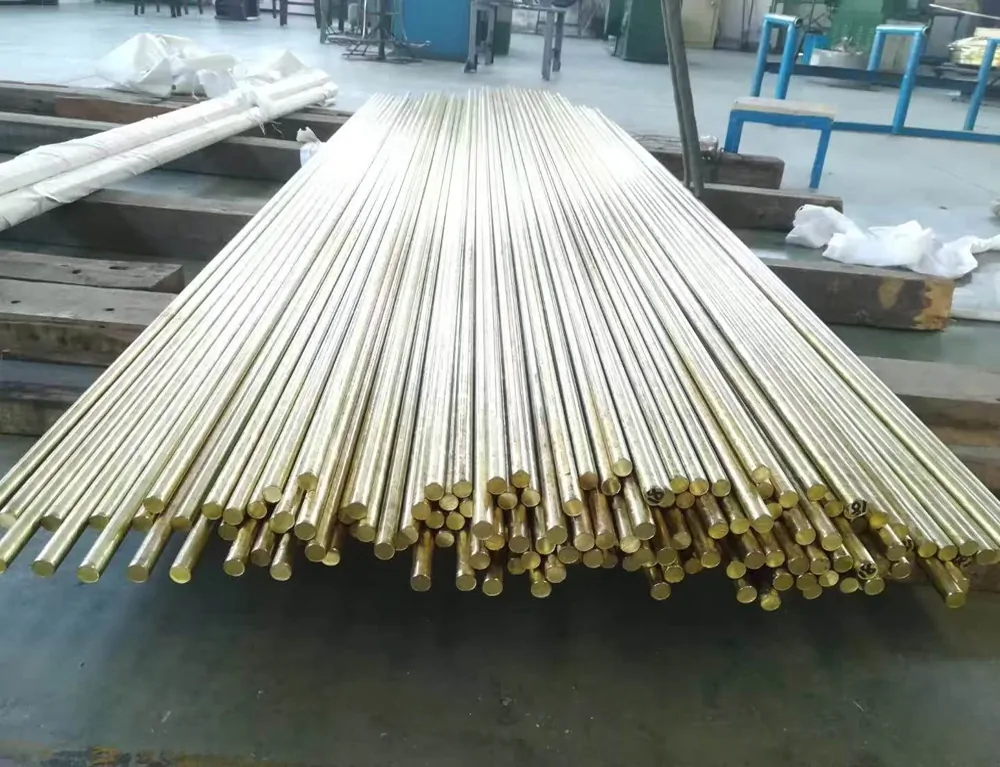
What should a buyer specify for brass rod or bar?
State whether the product is round rod, square bar, hexagonal bar, rectangular bar or another section. Provide the exact brass designation and standard, diameter or section dimensions, dimensional tolerances, cut length, straightness, condition or hardness, surface, quantity and application. Describe turning, drilling, threading, milling, forming or other downstream work.
Brass rod and bar RFQ checklist
| Field | Information to send | Review purpose |
|---|---|---|
| Section shape | Round, square, hexagonal, rectangular or drawing-defined profile | Defines how dimensions and tolerances are applied. |
| Grade / standard | Drawing designation and governing material reference | Identifies chemistry, properties and product requirements. |
| Section dimensions | Diameter, width, thickness, across-flats, corner radii and tolerances | Defines supply size and machining allowance. |
| Length / straightness | Random or cut length, length tolerance and measurable straightness | Supports feeding, turning and assembly. |
| Condition / surface | Temper, hardness, finish, oxidation, defects and end condition | Clarifies downstream process requirements. |
| Machining / use | Turning, drilling, threading, milling, forging, application and critical features | Provides material and allowance context. |
| Composition controls | Buyer or regulatory restriction and required acceptance document | Prevents assumptions based on a generic brass name. |
| Documents / packing | MTC or COA request, dimensional report, bundle weight, end protection and case | Clarifies inspection and export delivery. |
Define the section shape and acceptance dimensions
Use a standard shape name where possible. For hexagonal bar, identify the across-flats dimension; for square or rectangular bar, define width, thickness and any corner-radius requirement. Attach a controlled drawing for a nonstandard section. State whether dimensions describe the supplied bar or the finished machined component.
Grade, standard and composition restrictions
H59, H62, C36000, C37700 and other brass designations can appear in rod or bar inquiries, but designation similarity does not establish equivalence. Cite the governing standard and required condition. When the application or market controls lead or another element, provide the applicable restriction, test or document requirement rather than requesting only "low lead" or "lead free."
Diameter, section and machining allowance
Provide nominal section dimensions and permitted variation. If material will be turned or milled, state whether the requested supply size includes machining allowance and identify critical finished dimensions separately. Avoid applying finished-part tolerance directly to raw bar unless that is intentionally part of the supply specification.
Cut length, ends and straightness
State random length or exact cut length with tolerance. Add end requirements such as saw cut, chamfer, deburring or protection only when included in the supplier scope. Specify straightness as a measurable limit over a defined reference length or cite the governing product standard, especially for automatic feeding and long turned parts.
Condition, surface and downstream machining
State temper, hardness or required properties where relevant. Describe turning, drilling, threading, milling, knurling, forging, polishing or plating so the material and allowance discussion has process context. Surface requirements should identify critical areas and measurable limits for oxidation, dents, scratches or scale.
Inspection, identification and packing
List critical dimensions, straightness, material records and any requested inspection report. Confirm MTC or COA format before order. Packing should define bundle size and weight, separators, moisture protection, end protection, labels, heat or lot identification, pallet or wooden case and safe lifting requirements.
Brass bar RFQ example
Product: Hexagonal brass bar
Grade: State designation and governing standard
Section: State across-flats size and tolerance
Length: State cut length and tolerance
Straightness: State limit and reference length
Condition: State hardness or property requirement
Process: Turning, drilling and threading
Quantity: State trial and recurring demand
Documents: State material and inspection records
Packing: Bundled in export wooden case
For a cross-form overview and grade communication cautions, also review the Brass Material Specification Guide.
Frequently asked questions
What dimensions are required for a brass bar RFQ?
State the section shape, diameter or section dimensions, dimensional tolerance, length and length tolerance. Add across-flats, corner radii, straightness or a drawing when they are critical.
Should machining allowance be included in brass bar size?
State clearly whether the requested dimensions are supply size or finished size and identify any machining allowance. Keep raw-material tolerances separate from finished-part tolerances.
How should a composition restriction be requested?
Cite the applicable regulation, customer specification or numerical composition limit and identify the required test or document. Do not rely only on a general label such as low-lead brass.
Send the complete specification for review
Include the grade, dimensions, tolerance, condition, quantity, application, destination and packing or document requirements.
Send RFQ FormView Brass Rod & BarReview Grade References