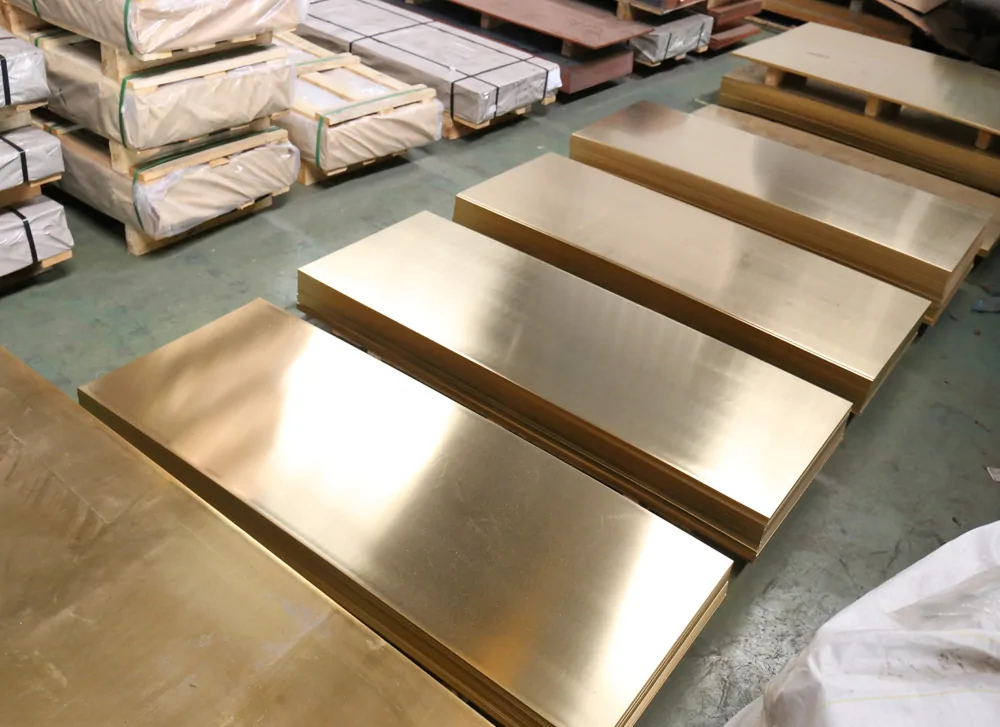
What should a buyer specify for brass material?
First identify whether the requirement is strip, sheet, plate, rod, bar, tube or a custom profile. Then state the grade and governing standard, dimensions and tolerances, temper or hardness, surface condition, quantity, application and processing method. Add document, packing, destination and trade-term requirements before quotation.
Brass RFQ checklist by product form
| Product form | Core dimensions | Additional information |
|---|---|---|
| Strip / coil | Thickness, width, coil ID / OD and tolerances | Temper, edge, surface, coil weight and stamping process |
| Sheet / plate | Thickness, width, length and tolerances | Flatness, surface, protective packing and cutting needs |
| Rod / bar | Diameter or section size, length and tolerances | Machining process, straightness, surface and lead restrictions if applicable |
| Tube / pipe | Outer diameter, wall thickness, length and tolerances | Condition, straight or coil form, surface, ends and joining process |
| Custom profile | Dimensioned cross-section drawing and length | Critical tolerances, alloy, surface, machining and sample requirements |
Grade and standard designation
Use the grade shown on the drawing, bill of materials or previous certificate. H59, H62, H65, H68, C26000, C27000, C36000 and C37700 are examples of designations found in industrial brass inquiries, but they belong to different standard systems and product uses. They should not be treated as automatic equivalents.
The quoted standard, chemical limits, mechanical properties, condition and product form should be reviewed together. If regulatory or customer restrictions apply to lead or another element, include the applicable requirement and acceptance document in the RFQ.
Brass strip and sheet requirements
For strip, send thickness, width, tolerances, coil ID, preferred OD or coil weight, temper, surface and edge condition. For sheet and plate, add cut length, flatness and protective packing. Tell the supplier whether the material will be stamped, bent, deep drawn, polished, plated or welded.
Brass bar and machining requirements
State round, square, hexagonal or another section, then provide size, length, dimensional tolerance, straightness and surface expectations. Describe turning, drilling, threading, forging or other downstream work. When machinability or a controlled composition is important, cite the required standard rather than relying only on a general description such as "free-cutting brass."
Brass tube requirements
Provide outer diameter, wall thickness, tolerances, straight length or coil dimensions, temper, inner and outer surface, end condition and quantity. Include the joining, bending, flaring or machining process and the intended application. State inspection or testing requirements with their acceptance criteria.
Custom brass profile drawings
A profile RFQ should include a dimensioned cross-section, overall length, critical tolerances, corner radii, straightness and surface requirements. Mark which dimensions affect assembly. State whether machining, drilling, tapping, polishing, plating or another secondary operation is included in the requested scope.
Documents, packing and commercial scope
List any required MTC, COA, dimensional report, certificate of origin or customer document. Confirm availability and format for the specific product and order. Add package type, moisture protection, maximum package weight, labels, shipping marks, destination and requested trade term.
Brass material RFQ example
Product: Brass strip in coil
Grade: H62 to stated GB reference
Size: 0.80 mm x 120 mm
Tolerance: State thickness and width limits
Condition: State temper or hardness
Process: Stamping and bending
Quantity: State trial and production demand
Application: Industrial hardware component
Documents: State certificate and inspection needs
Packing: Moisture protection and export pallet
Product-specific brass RFQ guides
Use the focused guide that matches the requested product form. Each guide expands the dimensions, processing context, inspection fields and packing information needed for that form:
Frequently asked questions
Can brass grades from different standards be treated as equivalent?
Not automatically. Compare the governing standard, chemistry, mechanical properties, condition, product form and application before confirming a substitution or equivalence.
What information is needed for a brass bar machining RFQ?
Provide the grade and standard, section shape and size, length, tolerances, straightness, surface, quantity and downstream machining process. Include regulatory composition restrictions when applicable.
Why should the brass product form be stated first?
Strip, sheet, bar, tube and profiles use different dimension, tolerance, condition, processing and packing information. The product form determines the rest of the RFQ checklist.
Send the complete specification for review
Include the grade, dimensions, tolerance, condition, quantity, application, destination and packing or document requirements.
Send RFQ FormView Brass Strip & SheetReview Grade References