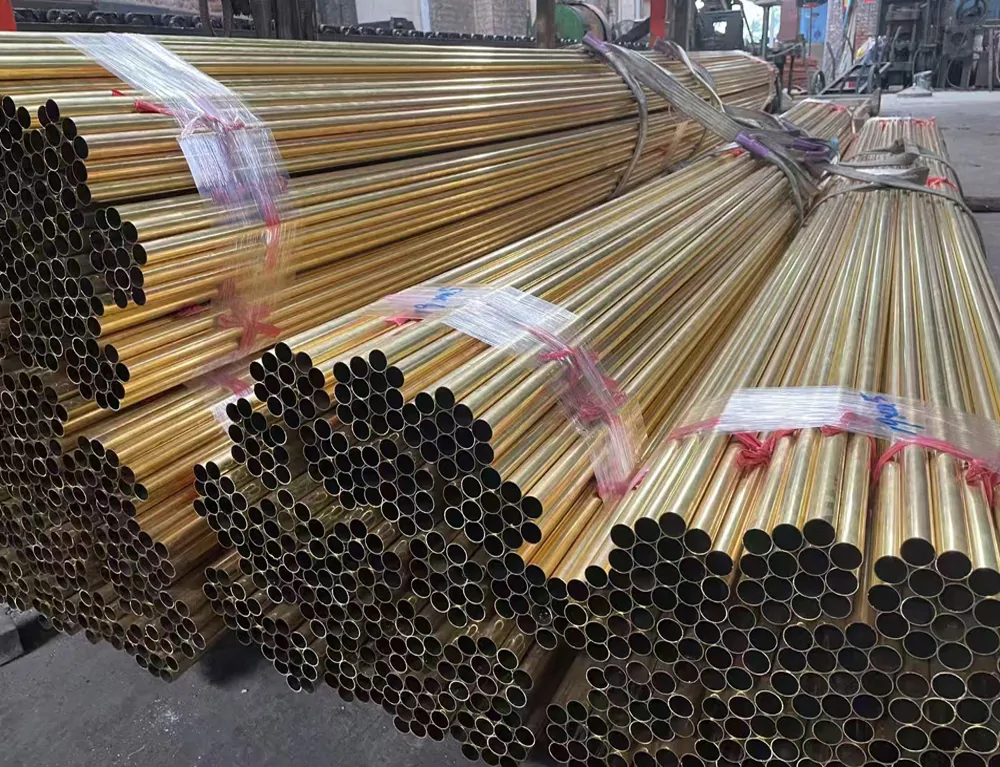
What should a buyer specify for brass tube or pipe?
Provide the exact brass designation and standard, outer diameter, wall thickness, their tolerances, straight length or coil form, condition, inner and outer surface, end condition, quantity and application. State whether bending, flaring, expanding, machining, brazing, welding, plating or another downstream process is planned. Add buyer-required tests and acceptance criteria where applicable.
Brass tube and pipe RFQ checklist
| Field | Information to send | Review purpose |
|---|---|---|
| Grade / standard | Drawing designation and governing product or material reference | Identifies chemistry, condition, dimensions and test rules. |
| Tube dimensions | Outer diameter, wall thickness and permitted variation | Defines fit, weight and forming requirements. |
| Shape controls | Ovality, concentricity, straightness or drawing-defined limits | Supports assembly and processing review. |
| Form / length | Straight cut length or coil dimensions, with length tolerance | Defines delivery form and handling. |
| Condition / surface | Temper, hardness, inner and outer finish, cleanliness and defect limits | Provides forming, joining and appearance context. |
| Ends / processing | Cut, deburred, chamfered, capped, flared or machined ends and downstream process | Clarifies the requested supply scope. |
| Tests / documents | Buyer-required method, acceptance limit, MTC or COA and inspection report | Defines measurable acceptance and records. |
| Quantity / packing | Length or weight, application, bundle limits, end protection and export case | Supports quotation and delivery planning. |
Grade and product standard
Brass tube designations vary by standard and intended product. State the exact drawing designation and governing reference instead of selecting a grade from a similar name. Chemistry, condition, dimensions, test requirements and application must be reviewed together. Any regulatory composition restriction should be included with its acceptance document.
Outer diameter, wall thickness and shape controls
Provide nominal outer diameter and wall thickness with tolerances. If fit or processing depends on ovality, concentricity or straightness, define measurable limits and reference the inspection method. Include mating dimensions or a controlled drawing when the tube enters a fitting, is expanded into an assembly or becomes a precision machined component.
Construction, straight length and coil form
If the drawing or standard requires a particular tube construction or manufacturing route, state it explicitly. For straight tube, provide length, length tolerance, end condition and bundle limits. For coil form, provide coil inner diameter, preferred outer diameter, maximum weight and winding requirements. Do not assume every grade or size is available in every form; confirm the final supply scope in the quotation.
Condition, bending and joining
State condition, temper, hardness or mechanical property requirements and describe whether the tube will be bent, flared, expanded, brazed, welded, soldered, machined or plated. This processing context helps review the requested specification, but final material and process suitability remains the buyer's engineering responsibility.
Inner and outer surfaces, cleanliness and ends
Define inner and outer surface requirements, oxidation or mark limits, cleanliness, residue, coating or plating where relevant. End scope may include square cutting, deburring, chamfering, caps or machining. State the critical surface and measurable acceptance limits rather than requesting only a "good surface."
Inspection, testing and documents
When dimensional checks, pressure, leakage, eddy-current, composition or another test is required by the buyer, cite the method, sampling and acceptance limit. This guide does not claim that every test is available for every order. Confirm capability, third-party requirements and MTC, COA or report format before purchase.
Export packing and identification
For straight tubes, specify bundle weight, wrapping, separators, end protection and wooden-case or pallet limits. For coils, define support and moisture protection. Add labels, lot identification, destination, maximum package weight, lifting restrictions and shipping marks needed for receiving.
Brass tube RFQ example
Product: Straight brass tube
Grade: State designation and governing standard
Size: OD 20 mm x wall 1.5 mm
Tolerance: State OD, wall and length limits
Condition: State temper or forming requirement
Ends: State cut, deburring and protection
Process: Bending and brazing
Quantity: State total length or weight
Inspection: State methods and acceptance criteria
Packing: Bundled with end protection in export case
For a cross-form overview and grade communication cautions, also review the Brass Material Specification Guide.
Frequently asked questions
Which dimensions are needed for a brass tube RFQ?
Provide outer diameter, wall thickness and their tolerances, plus straight length or coil dimensions. Add ovality, concentricity, straightness or end requirements when they affect fit or processing.
Should a brass tube inquiry state the downstream process?
Yes. Bending, flaring, expanding, brazing, welding, machining or plating provides context for the required condition, surface, dimensions and inspection.
How should tube testing be requested?
Cite the governing standard or buyer test method, sampling plan and acceptance limit. Confirm capability, report format and any third-party requirement before order.
Send the complete specification for review
Include the grade, dimensions, tolerance, condition, quantity, application, destination and packing or document requirements.
Send RFQ FormView Brass Tube & PipeReview Grade References