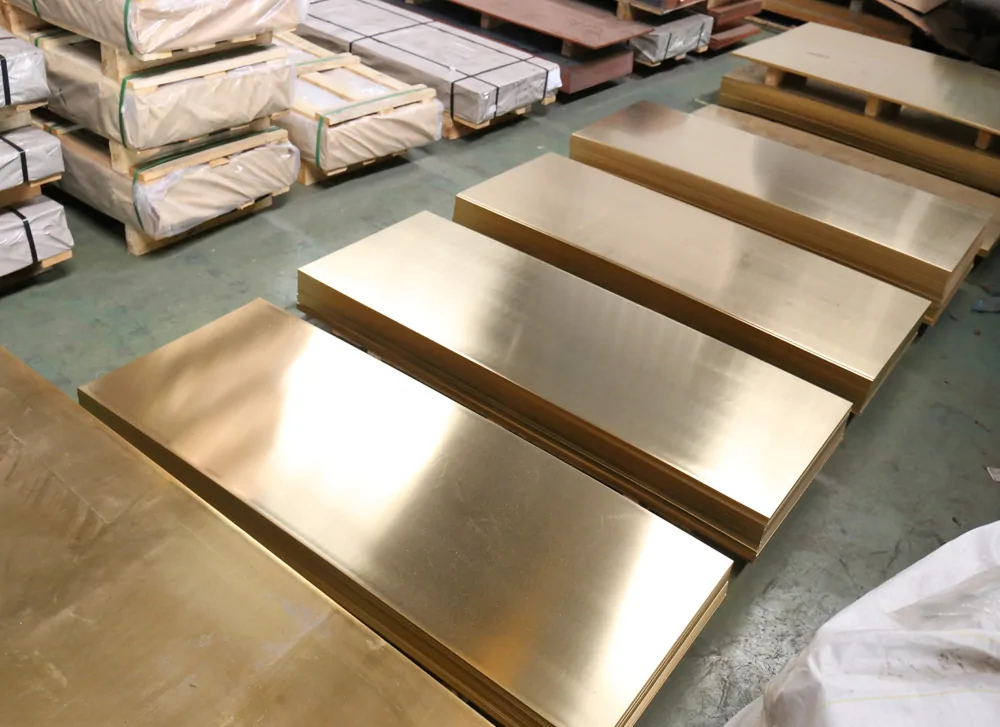
What should a buyer specify for brass strip or sheet?
Identify whether the request is strip in coil, flat sheet, plate or cut blank. Provide the exact brass designation and governing standard, thickness, width, sheet length or coil requirements, dimensional tolerances, temper or hardness, surface and edge condition, quantity and application. Add stamping, bending, drawing, polishing, plating, welding or cutting information when those processes affect acceptance.
Brass strip and sheet RFQ checklist
| Field | Information to send | Review purpose |
|---|---|---|
| Product form | Strip in coil, sheet, plate or cut blank | Defines length, handling, tolerance and packing information. |
| Grade / standard | Drawing designation and governing GB, ASTM, UNS, JIS, EN or another reference | Identifies the requested chemistry, condition and product rules. |
| Dimensions | Thickness, width, sheet length or blank dimensions and tolerances | Defines the required supply size. |
| Temper / properties | Temper, hardness range or stated mechanical requirements | Provides forming and rigidity context. |
| Surface / edge | Finish, visible side, oxidation or scratch limits, slit edge, burr or protective film | Clarifies appearance and downstream processing needs. |
| Coil / shape data | Coil ID, preferred OD, coil weight, camber, flatness or squareness | Supports feeding, handling and assembly review. |
| Processing / use | Stamping, forming, polishing, plating, welding, application and quantity | Provides selection and quotation context. |
| Documents / packing | MTC or COA request, inspection report, interleaving, moisture protection and export case | Clarifies acceptance and delivery scope. |
Choose the correct delivery form
Strip, sheet and plate terminology can depend on the governing standard and the buyer's process. State the required form and cite the standard rather than assuming a universal thickness boundary. For strip, include coil data. For sheet or cut blanks, include length, squareness, flatness and edge requirements where they are functionally necessary.
Grade and governing standard
H62, H65, H68, C26000, C26800, C27000, C28000 and other designations may appear in brass strip or sheet inquiries. They come from different standard systems and must not be treated as automatic equivalents. Review chemistry, mechanical properties, condition, product form and the cited standard together. If the finished part has a composition restriction, provide the exact requirement and required evidence.
Thickness, width and shape tolerance
State nominal thickness and width with permitted variation. For automated stamping, also identify critical camber, flatness, edge or coil consistency requirements and the inspection method. For sheet or cut blanks, distinguish supply dimensions from finished-part dimensions and state whether machining or forming allowance is included.
Temper and downstream forming
Temper or hardness affects forming behavior, springback and rigidity. State the required condition or property range and explain whether the material will be blanked, bent, deep drawn, rolled, coined or otherwise formed. The buyer remains responsible for validating final grade and condition suitability in the finished process.
Surface, edges and plating preparation
Define the critical surface, permitted oxidation or marks, finish direction, cleanliness and protective film when relevant. Edge requirements can include slit condition, deburring or a measurable burr limit. If polishing or plating follows, state which side is visible or functional and cite any surface preparation or coating specification used for acceptance.
Coil, sheet and export packing
For coils, provide inner diameter, preferred outer diameter, maximum coil weight, winding orientation and any splice restriction. For sheets or blanks, state interleaving, surface protection, pallet or wooden-case requirements, maximum package weight, labels and lifting restrictions. Confirm document format and packing scope before order.
Brass strip RFQ example
Product: Brass strip in coil
Grade: State designation and governing standard
Size: 0.60 mm x 80 mm
Tolerance: State thickness, width and camber limits
Temper: State condition or hardness range
Coil: State ID, preferred OD and maximum weight
Surface / edge: State finish and burr requirement
Process: Stamping and plating
Quantity: Separate trial and recurring demand
Packing: Moisture protection and export pallet
For a cross-form overview and grade communication cautions, also review the Brass Material Specification Guide.
Frequently asked questions
What dimensions are needed for a brass strip RFQ?
Provide thickness, width and their tolerances, plus coil inner diameter, preferred outer diameter or weight. Add camber, flatness, edge or burr limits when they affect feeding or stamping.
Should brass strip temper be stated with the grade?
Yes. Grade and temper or hardness should be stated together because forming behavior, springback and rigidity depend on both the material and condition.
What is different about a brass sheet RFQ?
For sheet or cut blanks, add length, length tolerance, flatness, squareness, edge or cutting scope, surface protection and packing information instead of coil handling data.
Send the complete specification for review
Include the grade, dimensions, tolerance, condition, quantity, application, destination and packing or document requirements.
Send RFQ FormView Brass Strip & SheetReview Grade References